WATER CONSUMPTION IN ALMOND FARMING
Radicle Groundwork
THE IMBALANCE
If you've ever driven California's farm highways, you know the billboards decrying water costs and legislative limits, often posted alongside almond orchards. Almonds are water hogs: one single almond takes 3.2 gallons of water to produce, and California, producing about 560 billion of them a year, accounts for roughly 80% of the world's supply.
THE PROBLEM IN CONTEXT
Through my research, I learned that planting cover crops in almond orchards does not require extra watering. In fact, it helps the soil retain water from rain or intentional flooding, the typical method for watering almond orchards. Cover crops also reduce the overall amount of pesticides needed, and when native flowers are planted, provide a vibrant ecosystem for much needed pollinators. There exist a variety of ways to spread cover crop seeds in orchards, but industrial seed rollers, the machinery that drives them into the soil, is too wide to fit between the rows of trees.
THE INTERVENTION
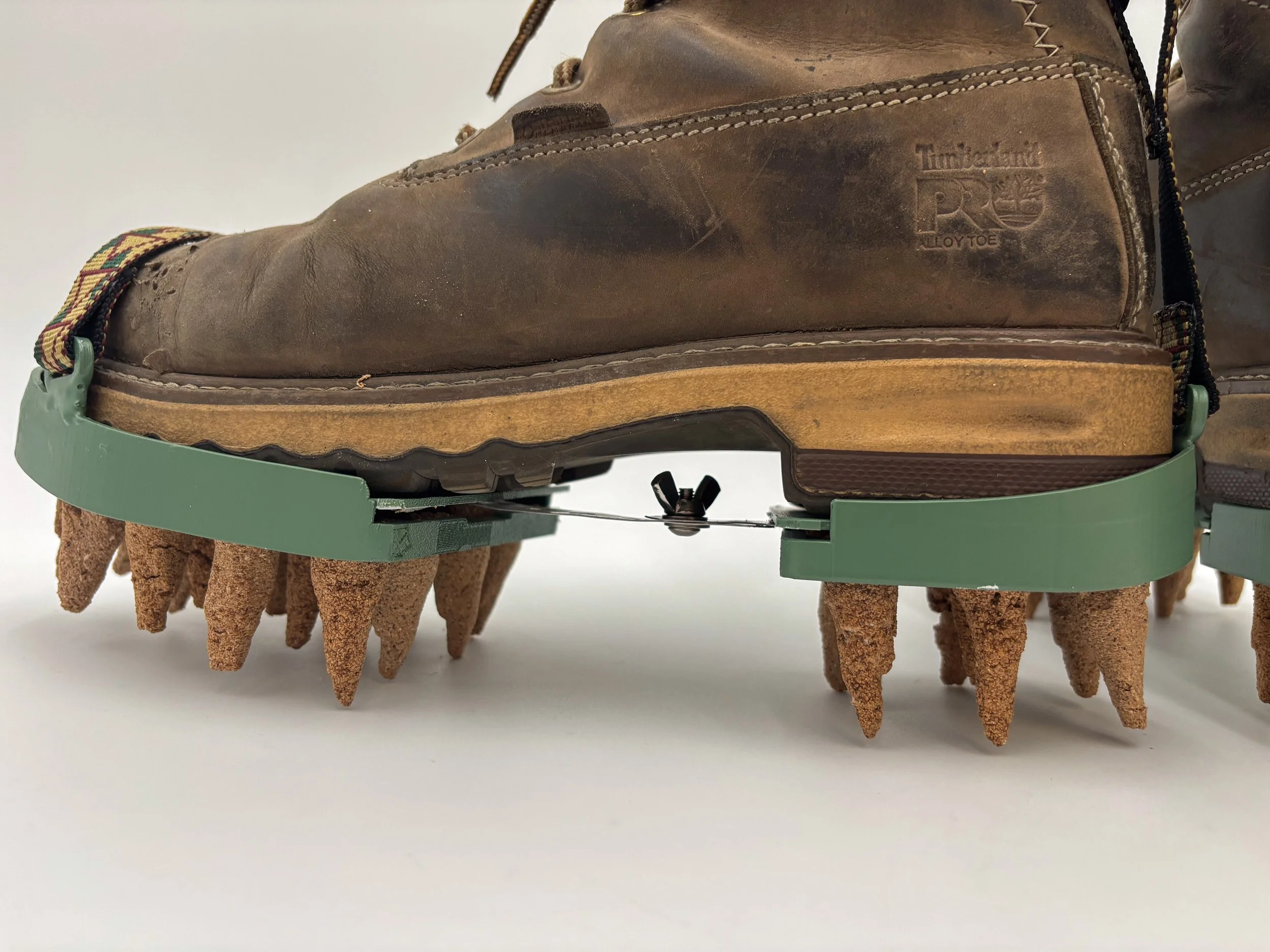
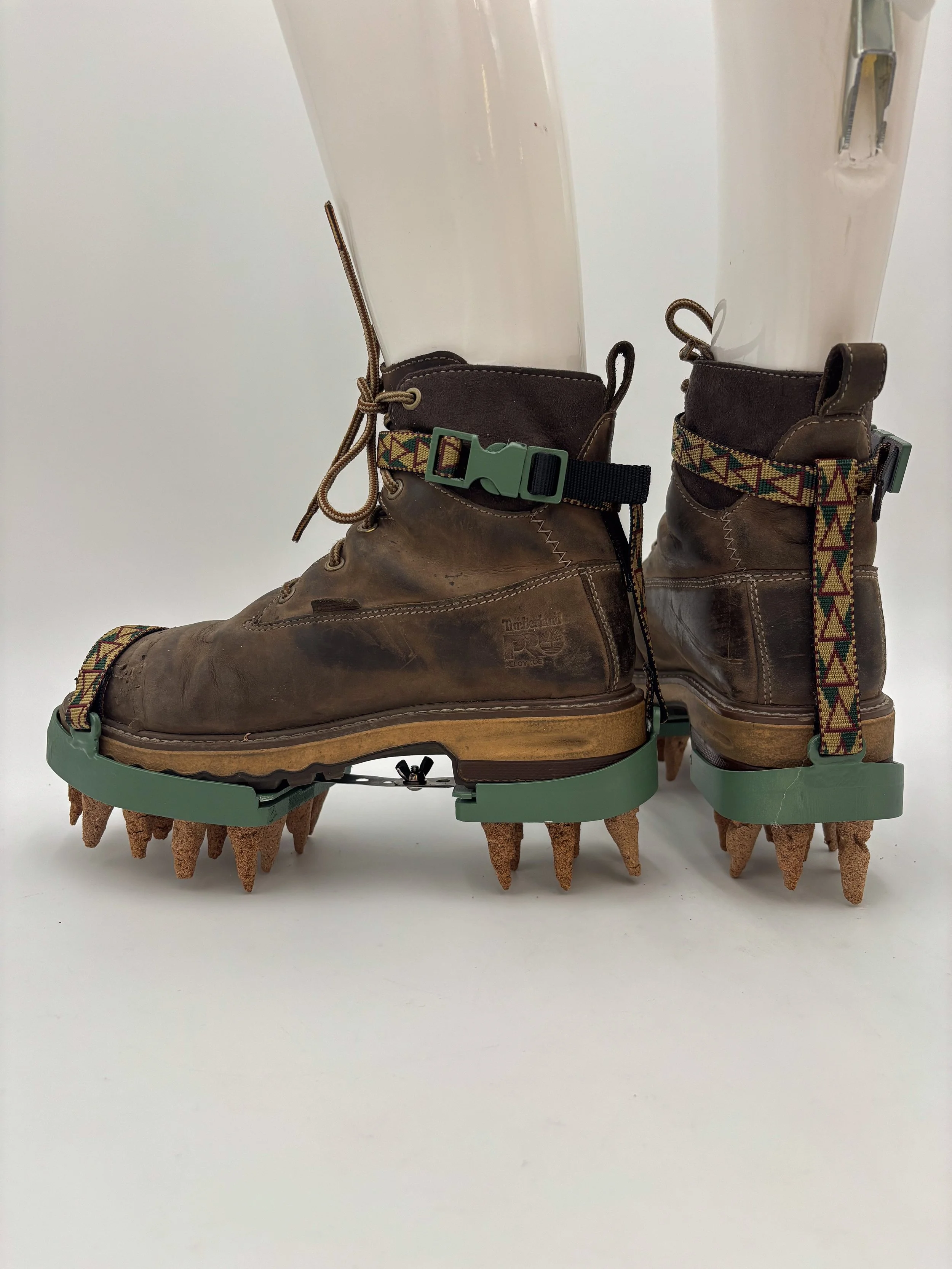
Adjustable cleats with replaceable seed-planting spikes made from almond waste.
I designed a pair of cleats to be worn over work boots. Donned while spreading cover crop seeds, the almond waste spikes drive the seeds deeper into the soil, thus increasing the rate of successful germination. The spikes, modeled after the shoots that sprout from almonds, are made from almond processing waste.
I call the project Radicle Groundwork, a pun to acknowledge that real change often happens on the ground in unglamorous places with people who aren't afraid to get dirty.
PROTOTYPING AND ITERATION
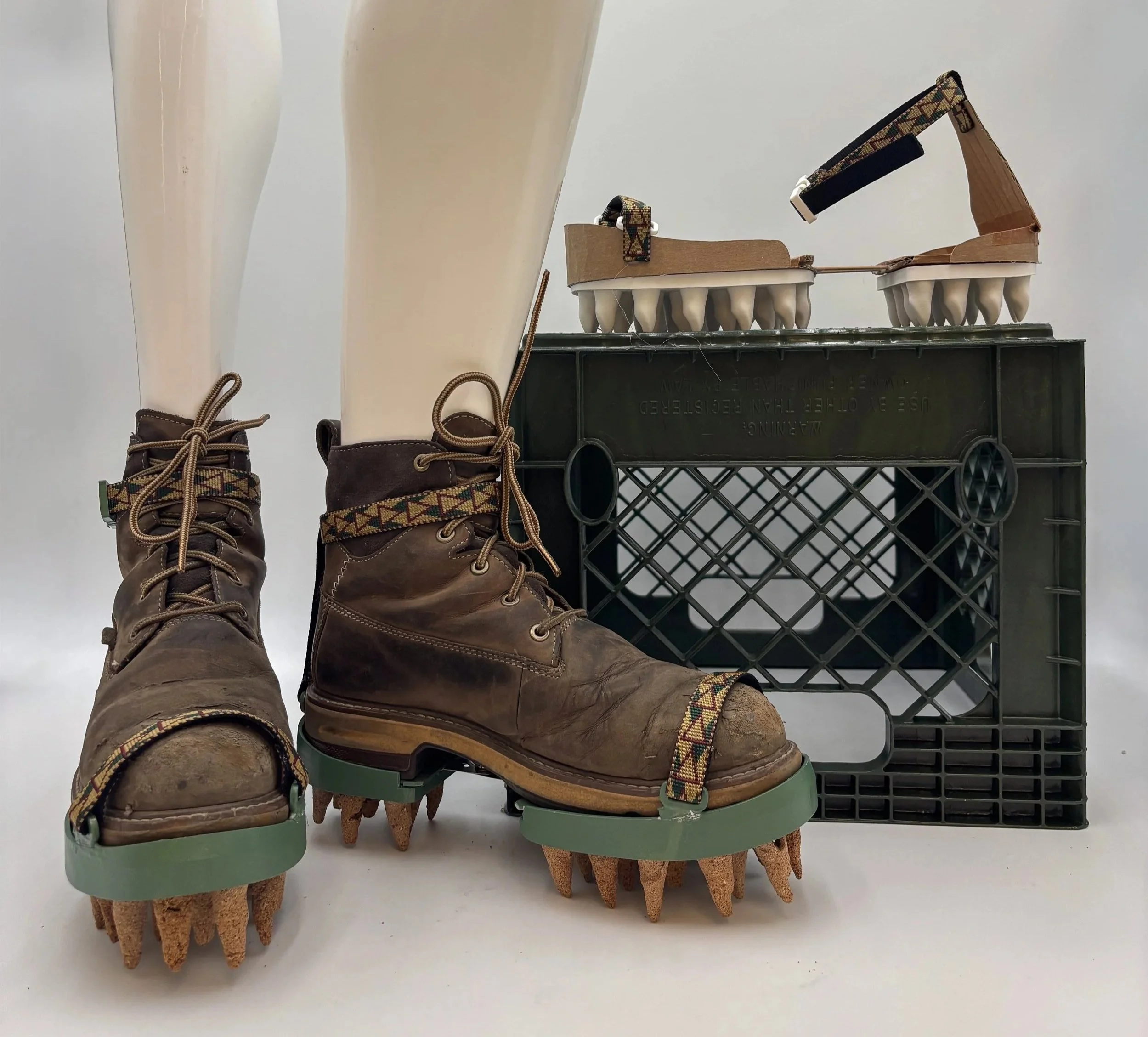
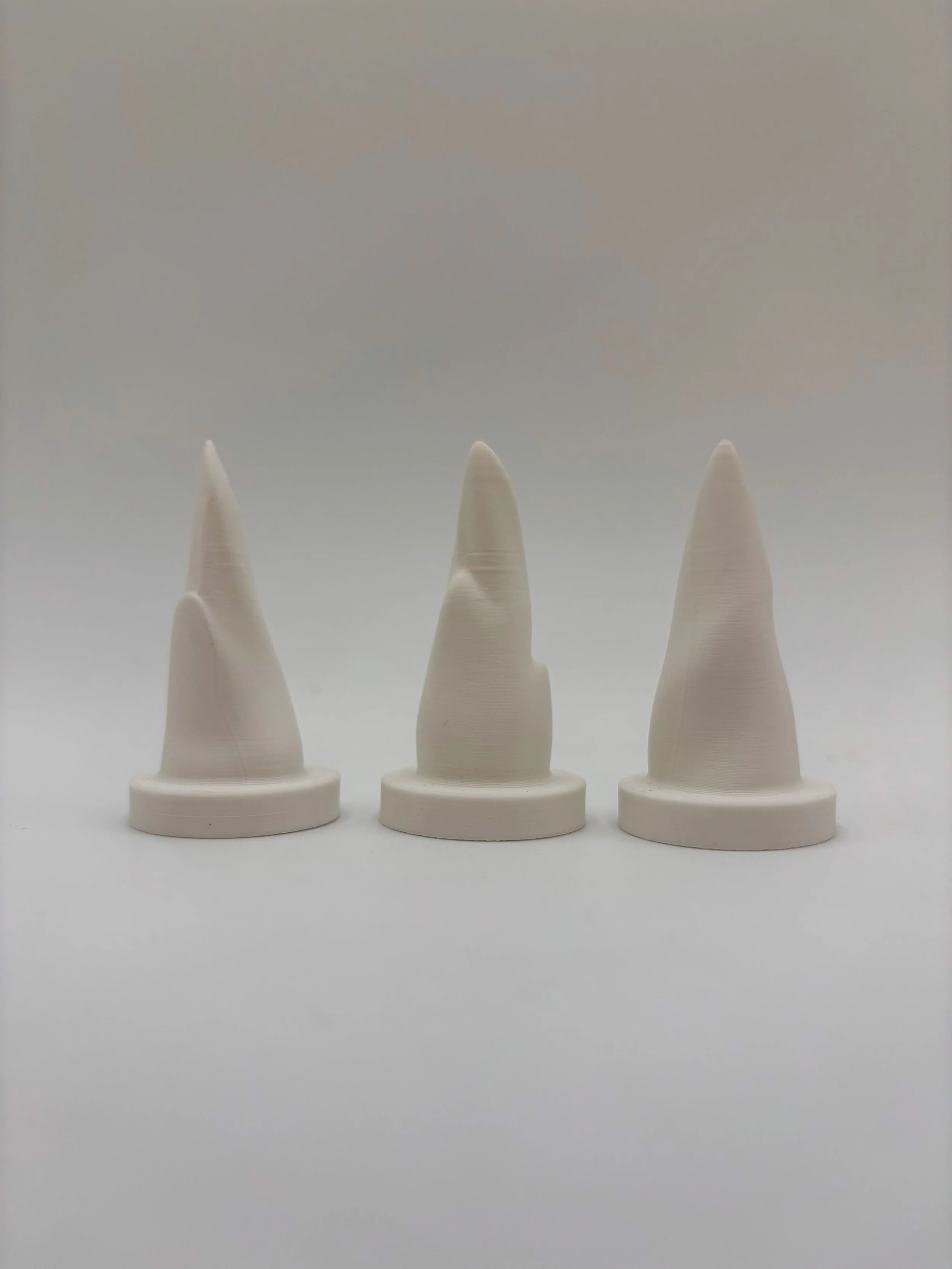
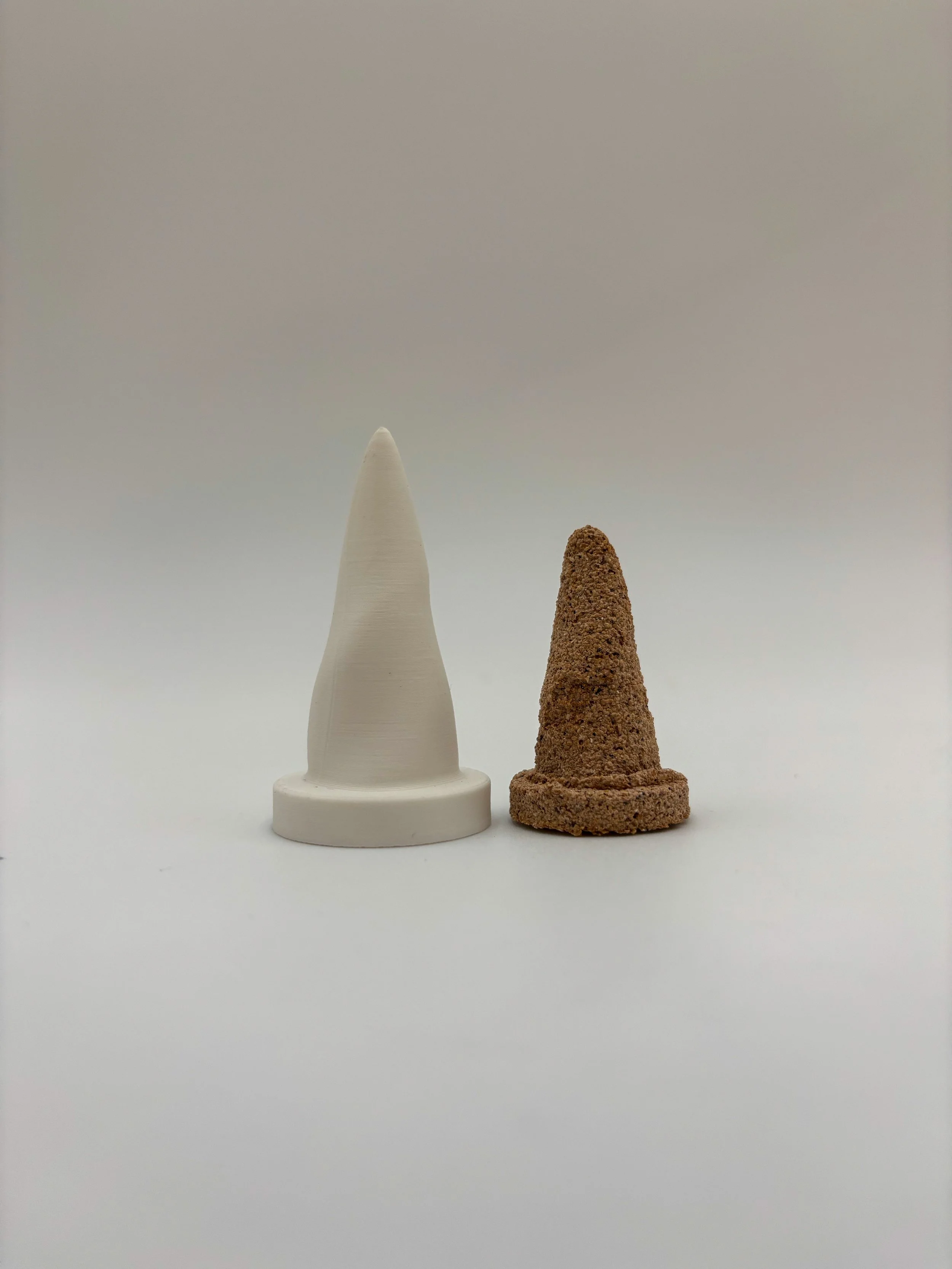
Working quickly before it sets, the material can be poured into molds. I worked in batches and repeated the process seven times to get the fifty shoots that sprout from the bottom of the cleats.
When processing almonds for the edible kernel inside, a lot of the plant material is discarded. Almond hulls (fibrous casings that make up part of the fruit) and the shells underneath became the raw materials for my exploration. Agar agar and alginate gel everything together and the almond waste lends strength. A hint of glycerin preserves spongey-ness, keeping the hardened material from being too brittle.
HOW IT WORKS
They're quite hard, but are designed to eventually wear down and break off. When they do, they return the same soil they grew out of as fertilizer. The spikes can be individually replaced; the cleats are a sustainable hybrid of long-lasting manmade materials and biodegradable organic matter. This almond waste composite shrinks a lot as it dries, so everything, from the molds to the holes in the cleats, must be designed with that in mind.
CURRENT STATUS AND REFLECTIONS